
CMDR COE Cognitive Warfare Course – Another Tool to Support NATO Deterrence and Defence
Date: (20-06-2026)
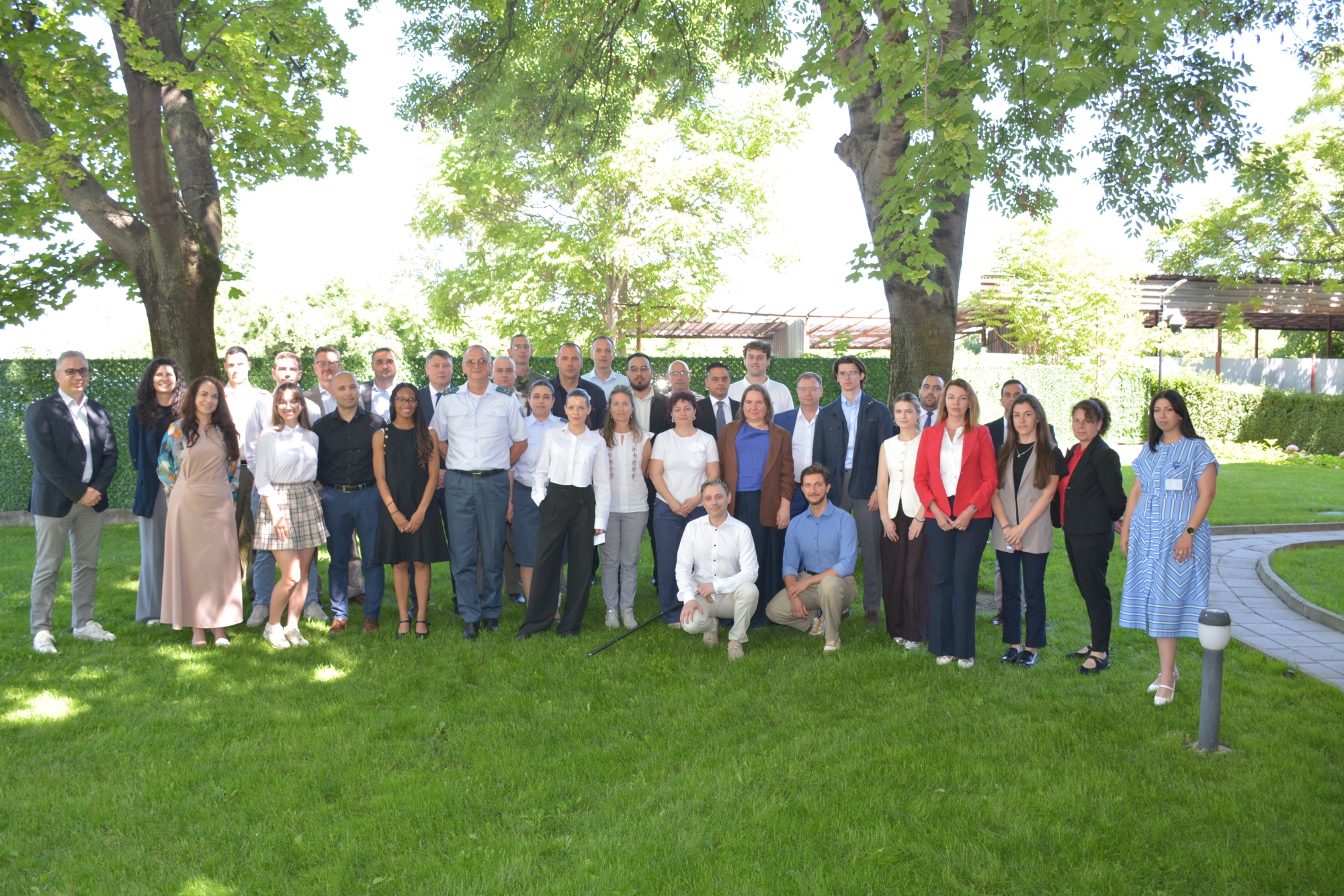
The Crisis Management and Disaster Response Centre of Excellence successfully conducted the 2026 iteration of its Cognitive Warfare Course from 15 to 19 June 2026 in Sofia, Bulgaria.
The course brought together over 25 military and civilian participants from five countries, representing a wide range of positions within NATO and national defence and security organisations, as well as academia, public institutions, and non-governmental organisations.
This year’s course was delivered in the context of NATO’s evolving approach to cognitive warfare and its direct relevance to Multi-Domain Operations (MDO) and the Deterrence and Defence of the Euro-Atlantic Area (DDA). As NATO continues to strengthen its ability to operate across all domains and environments, the cognitive dimension is increasingly important for maintaining decision advantage, protecting cohesion, strengthening resilience, and enabling effective action in peace, crisis, and conflict.
The course aimed to expand understanding of the cognitive dimension and its implications for security, defence, and society. It explored a wide range of topics, from the neurobiology and psychophysiology of human behaviour to the characteristics of the information environment, adversarial strategies for exploiting vulnerabilities, and approaches democratic societies can adopt to strengthen resilience.
Opening the course, the CMDR COE Director, Colonel Orlin NIKOLOV, emphasised that cognitive warfare is not simply another form of disinformation, nor solely a communication, cyber or technological problem. It is a security challenge that targets how individuals, groups, institutions and societies perceive reality, interpret events, build trust, make decisions and act. In this sense, the cognitive dimension directly affects NATO’s ability to deter, defend, operate and make decisions under pressure.
Over five intensive days, participants examined the neurological and psychological architecture of human cognition, cognitive biases and heuristics, identity, perception, meaning-making, social systems, cultural frameworks and group dynamics. The course also addressed the historical evolution of cognitive and information confrontation, as well as Russian, Iranian and Chinese approaches to strategic influence and cognitive operations.
A key focus was the practical contribution to the cognitive aspect of resilience. Participants discussed the cyber dimension of cognitive warfare, communication strategies for pre-bunking and inoculation, NATO’s approach to cognitive warfare, AI-driven transformation in the information space, OSINT and analytical approaches to tracking influence operations, and frameworks for countering AI-enabled cognitive operations.
The practical component of the course included syndicate work, group deliberations, national coordination discussions, and a capstone exercise focused on recommendations for a national cognitive resilience framework. These activities enabled participants to translate theory into practical approaches that support planning, training, decision-making, interagency coordination, and civil-military cooperation.
Throughout the course, one message remained clear: technology accelerates cognitive operations, but the human being remains central. Perception, trust, attention, judgement, identity, and cohesion are decisive factors for operational effectiveness, societal resilience, and Allied unity.
By bringing together military and civilian practitioners, researchers, public institutions, and civil society representatives, the course reaffirmed the unique value of CMDR COE as a platform where knowledge, operational experience, and cross-sector cooperation are transformed into preparedness. In doing so, the Centre contributes to NATO’s broader efforts to strengthen cognitive resilience, support multi-domain thinking, and reinforce deterrence and defence.
CMDR COE thanks all lecturers, instructors, facilitators, and participants for their valuable contributions to the successful delivery of the Cognitive Warfare Course 2026.
News
 Contribution of CMDR COE to Exercise Belene 2021
Appreciation of the CMDR COE efforts to the Exrcise Belene 2021 success.
» read more
 Disaster Management Course 24-28 May
Recognizing the increasing role of physical and human induced disasters in contemporary and future security environment, from 24 May to 28 May 2021, CMDR COE conducts Disaster Management Course.
» read more
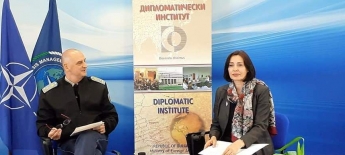 Pilot Course of Crisis Management in Multilateral Format
A course with the Diplomatic Institute, 11-13 May 2021
» read more
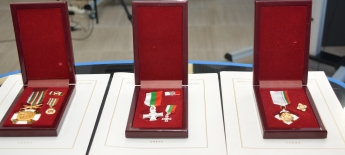 6th May Award Ceremony
For great achievements in service, merits to the defence of the country and in connection with the 6th May – The Day of Bravery and the Bulgarian Armed Forces Celebration, the Bulgarian Minister of Defence awarded personnel from CMDR COE.
» read more 6th CMDR COE Anniversary
On the 31st March 2015 CMDR COE received the official accreditation from the North Atlantic Council and was activated as a NATO military body with international status.
» read more Crisis Management and Disaster Response Course accomplished its goals
A challenging and constructive 2021 online iteration
» read more Awarded by the Bulgarian Chief of Defence
In recognition of the exceptional contribution to Balkan Bridges′2019 Exercise, ADM Emil EFTIMOV awarded COL Orlin NIKOLOV and LTC Valeri TONEV.
» read more
 First NATO-certified GFP course for 2021
Continuing the enlargement of the Gender Focal Point Community
» read more Continuous Cooperation with Local Authorities
An initial planning conference for exercise in the town of Belene
» read more Centre′s Participation in ACT Online Conference
Looking at ways to improve logistics management, pandemic analysis and Information Environment Assessment capabilities
» read more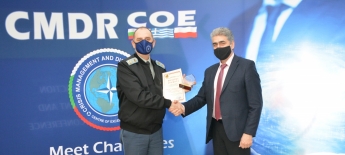 Deserved Recognition – Firefighter of Year 2020
A distinguished contribution of CMDR COE team
» read more Co-organising and Hosting North Macedonia 2021 Online Webinar
EADRCC together with CMDR COE in a Webinar, January 27
» read more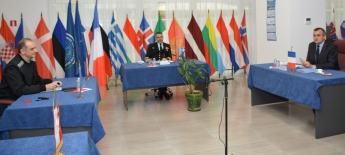
 Co-organising and Hosting Module4 of The 15 High level Course in CSDP
The European Security and Defence College (ESDC), the Bulgarian Diplomatic Institute, the CMDR COE and the EU Institute for Security Studies (EUISS) joined forces in enabling a collaborative training experience for senior leaders.
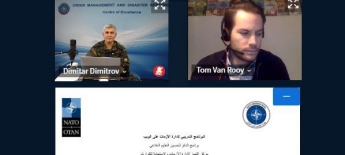 CMDR COE Assists Iraqi National Defence College
A Crisis Management Exercise Methodology Webinar in support of NATO Deep Iraq Programme – NATO Mission Iraq
» read more
 The MSG-187 Has Commenced
 MSG-187 ′Space Weather Environmental Modelling′ (SWEM) is led by CMDR COE
» read more A Monthly Stipend for Prospective Young Professionals
 The CMDR COE′s Internship Programme introduces a stipend for its successful internship candidates.
» read more Geographic Information Systems Day
An online conference was held in Bulgaria on November 18 on the occasion of the World Geographic Information Systems (GIS) Day.
» read more Coordination Efforts for Crisis Management Exercise in 2021
Development to assist municipalities’ efforts in crisis management and disaster response
» read more Distinguished visit in CMDR COE
Welcoming H. E. Mr. Jeong Jin-Kyu, the Ambassador Extraordinary and Plenipotentiary of the Republic of Korea to the Republic of Bulgaria.
» read more Continuing the enlargement of the GFP Community
First group of certified gender focal points at NATO Allied Command Operations.
» read more Beneficial Cooperation with Local Community
CMDR COE in support to Krasno Selo and Sixth District of Fire Safety and Civil Protection Service (FSCPS), Sofia Municipality
» read more
 Towards On-Demand Personalized Training and Decision Support
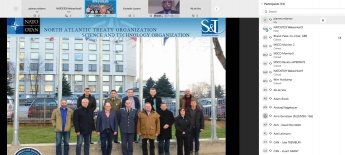
A virtual symposium of NATO Modelling & Simulation Group
» read more

